

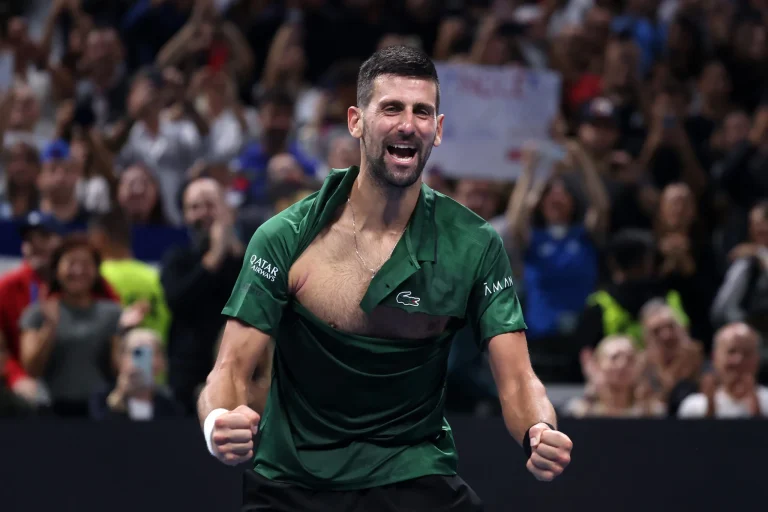
Novak Djokovic Mental Resilience Techniques That Opponents Cannot Seem to Match
Great tennis players hit winners under pressure, but Djokovic wins so often because he treats pressure like a place he has visited before. Novak Djokovic mental resilience is not a mystery trick or a born-with-it trait. It is a trained pattern: breathe, slow the scene, read the score, accept the noise, and make the next ball boring for the opponent. That is why American tennis fans, junior players, and weekend competitors still study him. He shows that the mind is not separate from footwork, timing, or recovery. It is baked into every split step. For readers who follow sports performance through trusted sports media insights, Djokovic offers a rare case study because his edge appears most clearly when the match feels least stable. His ATP profile lists 24 Grand Slam titles, a record that makes the mental side harder to dismiss as hype. He does not always look calm. That is the point. His control is not the absence of emotion. It is the skill of returning to order before the next point starts.
The Scoreboard Does Not Scare Him the Same Way
Djokovic’s great gift is not that he feels less pressure than other players. Watch him closely and you can see irritation, sarcasm, anger, doubt, and fatigue move across his face. The difference is what happens after that first emotional hit. Many players try to erase the feeling. Djokovic seems to file it, contain it, and play anyway. That makes his tennis mental toughness look colder than it is. In truth, it is active work.
Why His Best Points Often Arrive After Trouble
A break point against Djokovic rarely feels like a normal break point. The opponent may have earned the chance with brave tennis, yet the point suddenly slows down. Djokovic returns deep. He makes the next shot uncomfortable. He turns the player across the net from hunter into thinker.
The 2019 Wimbledon final against Roger Federer remains the cleanest public example. Federer won more total games, had championship points, and still lost the match because Djokovic owned the highest-stress pockets. A later academic paper on tennis scoring used that final as a central example of how a player can lose more games yet win the match under the scoring system. That is not magic. It is score awareness without panic.
Here is the non-obvious part: Djokovic does not always need to play his flashiest tennis in those moments. He often chooses safer depth, tighter targets, and longer rallies. The opponent expects a champion to attack. Djokovic often makes him prove he can finish the job twice.
How He Makes Pressure Feel Shared
Most players think of pressure as something happening to them. Djokovic flips it. If he is down break point, the server still has to land the first serve. If the crowd is loud, the opponent hears it too. If the rally stretches past ten shots, both bodies pay the bill.
That shift matters. It turns pressure from a private burden into a shared room. Once the room is shared, Djokovic can work.
American junior players can learn from this without copying his whole game. At 30-40, the goal is not to hit a highlight shot. The goal is to make the other player feel the score. Put the return in play. Aim heavy through the middle. Make the court smaller in your mind before you make it bigger with risk.
For deeper training context, a coach might pair this idea with match play preparation for young tennis players. The skill is simple to name and hard to build: stop treating pressure as proof that something is wrong.
Djokovic Mental Resilience Starts Between Points
Djokovic’s between-point routine is where the match is often repaired. Fans remember the sliding backhand, the elastic defense, the return of serve. Opponents remember something worse. They remember that after they hit a brilliant shot, he walks back and looks ready to ask the same question again.
That reset is not empty habit. It is the bridge between emotion and execution.
Breathing Gives Him a Place to Go
Djokovic has spoken in public about mental strength as something built through work rather than handed to him as a gift, and clips from his well-known 60 Minutes discussion are often shared because he ties that strength to conscious breathing and training. Strip away the celebrity layer and the idea is plain: breathing gives the nervous system a task.
A player cannot fully control the crowd, the line call, the net cord, or the opponent’s purple patch. He can control one inhale. Then one exhale. That small action gives the brain a handle.
This is why pressure point routines matter. A routine is not superstition unless the player treats it that way. Done well, it is a reset button. Bounce the ball. Look at the strings. Choose the serve pattern. Breathe. The outside world keeps shouting, but the player has stepped back into a private order.
Ritual Works Because It Reduces Choice
The casual fan may see Djokovic’s repeated gestures and think they are nervous tics. Some are emotional. Some are practical. The deeper value is that a routine reduces the number of choices he must make while tense.
Choice is expensive under pressure. Should I attack? Should I slow down? Should I complain? Should I rush? A strong routine answers the first question before it appears: reset first, decide second.
That is why sports psychology habits for competitive athletes should not be treated as soft advice. They protect decision-making. In tennis, one poor choice can become three lost games. The score moves fast when the mind is scattered.
The counterintuitive lesson is that freedom often comes from structure. Djokovic can improvise during the rally because the moments before the rally are controlled. He saves creativity for the ball, not for the panic around it.
He Uses Conflict Without Letting It Own Him
Djokovic’s relationship with crowds has never been simple. In the United States, especially at the US Open, he has often played in stadiums where the emotional pull favored Federer, Nadal, or a younger challenger. Some athletes shrink when they feel unwanted. Djokovic sometimes turns it into fuel, but not in the cartoon way people say.
Fuel can burn the hand holding it.
The Crowd Becomes Data, Not Destiny
Djokovic hears the crowd. He reacts. He may gesture, argue, smile tightly, or stare into the noise. Yet his best work comes when he turns that noise into data. The crowd wants the other player to rise. Fine. That tells him the opponent may now feel expected to rise.
That is a sharp read.
A hostile crowd can make the favorite too excited or the underdog too eager. Djokovic has made a career out of noticing when emotion pushes the other player half a step out of pattern. A rushed forehand. A second serve aimed too close to the line. A drop shot picked for applause instead of court position.
This is champion mindset at match speed. It is not positive thinking. It is reading human behavior while tired.
He Allows Emotion, Then Narrows the Job
Djokovic is not a blank wall, and that may be why his method lasts. Players who pretend they feel nothing often crack when the feeling gets too big. Djokovic’s style is different. The emotion comes out, then the job narrows.
There was a reminder of that at the 2026 Australian Open, when reports described him admitting he lost his cool after a careless ball-striking moment during a match he still won in straight sets. The same report noted that he kept control in the final tie-break and spoke afterward about patience and emotional control. That kind of episode matters because it shows the full picture. His edge is not perfect behavior. It is recovery.
For American players, this may be the most useful part. You do not need to shame yourself for being angry after a double fault. You need a plan for the next ten seconds. Turn away. Breathe. Name the next target. Play the next ball with height.
Emotion is not the enemy. Staying inside it too long is.
His Body Supports the Mind, Not the Other Way Around
No serious reading of Djokovic can separate his mind from his body. His flexibility, return position, recovery habits, and movement base all feed his confidence. It is easier to stay calm at 4-4 in the fifth set when your legs still obey you.
This is where many casual debates about tennis mental toughness go wrong. They talk as if belief floats above the court. Djokovic’s belief has muscle under it.
Defense Buys Him More Time to Think
Djokovic’s defensive skill changes the opponent’s math. A shot that would finish the point against most players comes back deep. A wide serve that should open the court becomes a neutral rally. A heavy approach shot becomes a low passing-shot problem.
Over time, that creates mental damage. The opponent begins to ask, “What do I have to do to win a point?” That question is poison during a tight match.
Djokovic’s ATP record and long stay near the top show how often that question has followed him across eras, surfaces, and rivals. Reuters listed him with 24 Grand Slam titles, 40 Masters titles, seven ATP Finals titles, and 428 weeks at world number one in its record summary. Those numbers are not only about strokes. They reflect repeated problem-solving under stress.
The hidden insight is that defense can be aggressive without looking bold. Djokovic attacks the opponent’s patience. He makes winning feel laborious. That is a mental weapon disguised as court coverage.
Recovery Habits Protect Late-Match Judgment
Djokovic’s longevity has often been linked to diet, sleep, breathing, and emotional wellness in public profiles. One recent account described him at 38 still competing with younger stars while crediting strict food choices, respiratory improvement, and mental well-being as part of his long-term approach. You do not need to copy every detail to understand the pattern.
The mind makes better choices when the body is not begging for rescue.
Late in matches, tired players choose relief shots. They go for winners too soon because rallies hurt. They rush serves because standing still feels awful. Djokovic’s physical base gives him room to choose the boring correct play. That is a major reason his pressure point routines hold up after three hours.
For a club player in Dallas, Chicago, or Phoenix, the lesson is not to chase a pro athlete’s diet. The lesson is to connect fitness to judgment. Better legs mean calmer targets. Better recovery means fewer emotional swings. Better breathing means less panic after one long rally.
The mind gets credit, but the body pays the rent.
Conclusion
Djokovic’s edge is easier to admire than to copy because it is made from many small habits, not one secret. He breathes with purpose. He slows pressure down. He lets emotion pass through without giving it the steering wheel. He trusts defense as a form of attack and uses routine to protect clear choices. Novak Djokovic mental resilience matters because it proves toughness is not loud. It can be quiet, repetitive, and almost dull from the outside. That is why opponents struggle to match it. They are not only playing his backhand or return. They are playing a man who has trained himself to restart the contest point by point. For American players, coaches, and fans, the takeaway is direct: build a reset before you build a bigger weapon. The player who recovers faster between points often looks stronger during them. Start there, and the scoreboard becomes less frightening.
Frequently Asked Questions
How does Djokovic stay calm during big points?
He does not stay calm all the time. He resets faster than most players. His breathing, pacing, target selection, and return discipline help him move from emotion back to execution before the next point begins.
What can junior tennis players learn from Djokovic’s mental game?
Young players should copy his reset habits, not his personality. A simple routine before every serve and return can reduce rushed choices. The goal is to handle one point cleanly, then repeat that behavior.
Does Djokovic use breathing techniques during matches?
Yes, he has publicly connected mental strength with conscious breathing and repeated practice. Breathing gives a player something controllable when the score, crowd, and momentum feel unstable.
Why is Djokovic so strong in tie-breaks?
Tie-breaks reward clarity, return depth, and emotional control. Djokovic often avoids panic choices, makes opponents play extra balls, and understands that one loose decision can decide the set.
Is Djokovic’s mental toughness natural or trained?
His own public comments frame it as trained work, not a simple gift. That distinction matters because it means players can improve their own pressure response through habits, repetition, and match exposure.
How does Djokovic handle hostile crowds?
He reacts at times, but he often turns crowd energy into competitive information. If the noise pushes an opponent to rush or overplay, Djokovic can use that emotion against him.
What is the best Djokovic habit for recreational players to copy?
Copy his between-point reset. Turn away from the last point, breathe once or twice, choose a clear target, and commit. That small habit can prevent one mistake from becoming a lost game.
Why do opponents struggle to finish matches against Djokovic?
They often have to win the same point in several ways. His defense, return depth, and pressure discipline make normal winners come back. That forces opponents to take extra risk when nerves are already rising.